
Table of Contents
ToggleIntroduction
Forging is one of the most important manufacturing processes used across industries like automotive, aerospace, construction, and heavy engineering. But when it comes to choosing between cold forging and hot forging, many businesses get confused.
Both methods have their own advantages, limitations, and ideal use cases.
In this guide, we’ll break down everything in simple terms so you can make the right decision for your application.
What is forging?
Forging is a manufacturing process where metal is shaped using compressive force. It improves the strength, durability, and structure of the material.
There are mainly two types:
- Cold Forging
- Hot Forging
What is Cold Forging?
Cold forging is performed at or near room temperature. The metal is shaped without heating it to high temperatures.
Key Features of Cold Forging:
- No heating required
- High dimensional accuracy
- Smooth surface finish
- Stronger finished products due to strain hardening
Benefits of Cold Forging:
- Better surface quality (less machining required)
- High production speed
- Reduced material waste
- Lower overall production cost
Limitations:
- Limited to smaller and simpler shapes
- Requires very high pressure
- Not suitable for very hard metals
Looking for precision forged components? Explore our Cold Forging Solutions a Akron Ring Forge
What is Hot Forging?
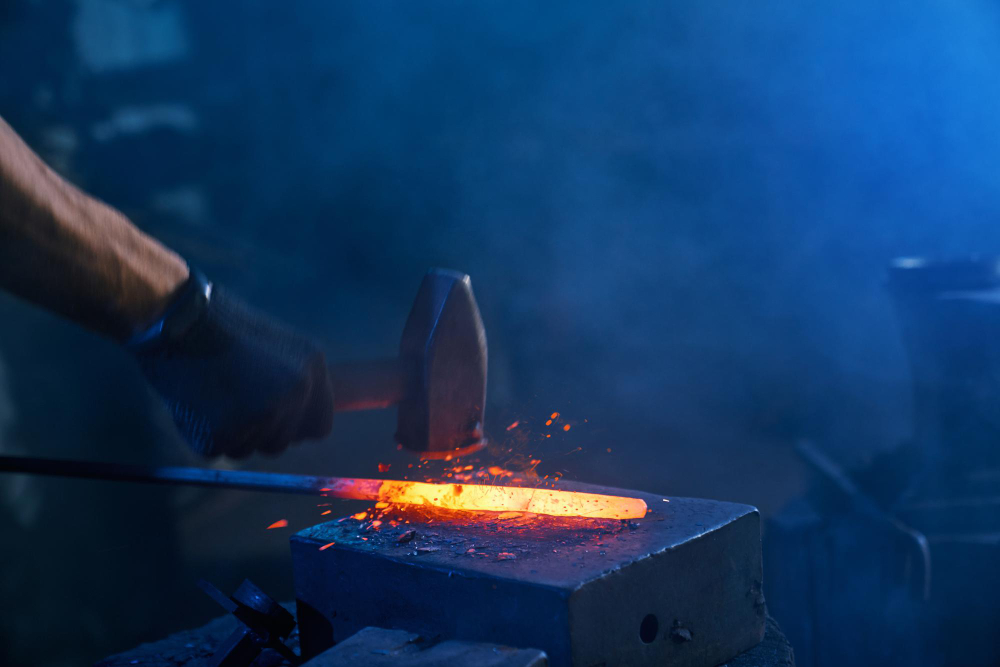
Hot forging is performed at very high temperatures, usually above the metal’s recrystallization point.
Key Features of Hot Forging:
- Metal is heated before shaping
- Easier to form complex shapes
- Reduced material resistance
Benefits of Hot Forging:
- Ideal for large and complex parts
- Improved ductility and flexibility
- Eliminates internal stresses
- Suitable for a wide range of metals
Limitations:
- Less precise compared to cold forging
- Requires additional machining
- Higher energy consumption
Need heavy-duty forged rings? Check out our Hot Forging Capabilities and Seamless Rolled Ring Forgings.
Cold Forging vs. Hot Forging: Key Differences
| Factor | Cold Forging | Hot Forging |
| Temperature | Room temperature | High temperature |
| Strength | Higher (strain hardening) | Good but less than cold forging |
| Precision | Very high | Moderate |
| Surface Finish | Excellent | Requires finishing |
| Complexity | Simple shapes | Complex shapes |
| Cost | Lower (in mass production) | Higher due to heating |
When to Choose Cold Forging?
Choose cold forging when:
- You need high precision components
- Surface finish is important
- Parts are small to medium in size
- You want cost-effective mass production
Common Applications:
- Automotive fasteners
- Bearings
- Small mechanical components
When to Choose Hot Forging?
Choose hot forging when:
- You need large or complex shapes
- Material is hard to deform
- Structural strength is critical
- Custom heavy components are required
Common Applications:
- Industrial machinery parts
- Aerospace components
- Seamless rolled rings for automotive industry
- Construction equipment
Why Forging is better than Casting or Machining?
Forging offers several advantages over other manufacturing processes:
- Higher strength and durability
- Better grain structure
- Improved fatigue resistance
- Reduced risk of failure
Learn more about our advanced manufacturing process on our Forging Capabilities Page.
How to Choose the Right Forging Method?
The right choice depends on:
- Component size
- Material type
- Required strength
- Production volume
- Budget
If you’re unsure, working with an experienced manufacturer can help you make the right decision.
Why Choose Akron Ring Forge?
At Akron Ring Forge, we specialize in:
- Seamless rolled ring forgings
- Custom forged components
- High-quality industrial solutions
- Advanced manufacturing technology
We help industries like automotive, heavy engineering, and infrastructure get durable and reliable forged products.
👉 Get in touch today to discuss your project requirements.
FAQs
- Which is stronger: cold forging or hot forging?
Cold forging usually produces stronger parts due to strain hardening.
- Is hot forging more expensive than cold forging?
Yes, hot forging involves heating, which increases energy and production costs.
- Can all metals be cold forged?
No, only ductile metals like aluminum and soft steel are suitable for cold forging.
- Why is hot forging used for large components?
Because heating makes metal easier to shape, allowing complex and large parts to be formed.
- What industries use forging the most?
Automotive, aerospace, construction, oil & gas, and heavy machinery industries.
Final Thoughts
Both cold forging and hot forging are essential processes in modern manufacturing. The right choice depends on your specific needs.
If you want precision, go for cold forging.
If you need strength and complex shapes, hot forging is the better option.